
BRIGHT BRIDGE
OVERVIEW
PROBLEM
FEATURE→ METRIC MAPPING
CLARIFYING CONSTRAINT
DESIGN SOLUTION
BI-WEEKLY VALIDATION
Overview
Every young offender deserves a rehabilitation environment that truly supports a better future. But that outcome depends on seamless coordination between Local Authorities and Supported Living Providers.
Manual workflows slow this down. And while some products promise digital transformation, many still deliver fragmented, unstable placement and handover systems that fall short of real operational efficiency.
Timeline
6 Months
My Input
Product Design
Prototyping
Design Team
Ridwan Gbolahan
Kolapo Akinlade
Adegbeite Kehinde
Bakare Saffiyah
THE GAP / PROBLEM
Real operational efficiency gap
From a strategy sync with Supported Living Providers and Local Authorities, we identified that the placement and handover process is fragmented and heavily manual.
Reliance on emails, spreadsheets, and disconnected tools leads to delays, unclear accountability, and inconsistent onboarding, making an already critical transition inefficient and unstable.
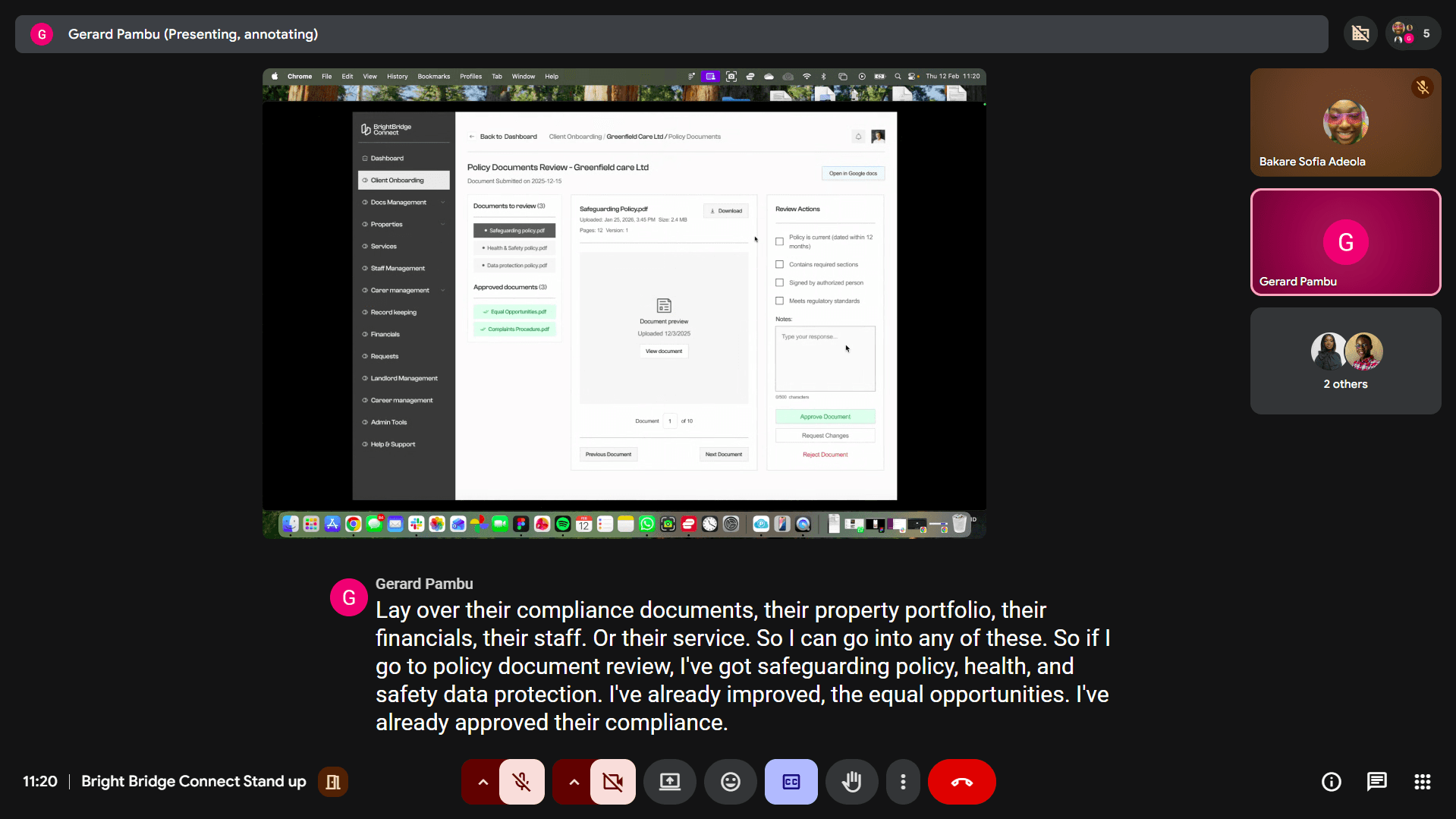
Given the sensitivity and complexity of the product, we aligned on a user-journey–led design approach, combining focused journey mapping, rapid prototyping, and bi-weekly validation sessions for each journey to ensure accuracy, compliance, and usability at every stage.
METRIC
Feature → Metric Mapping
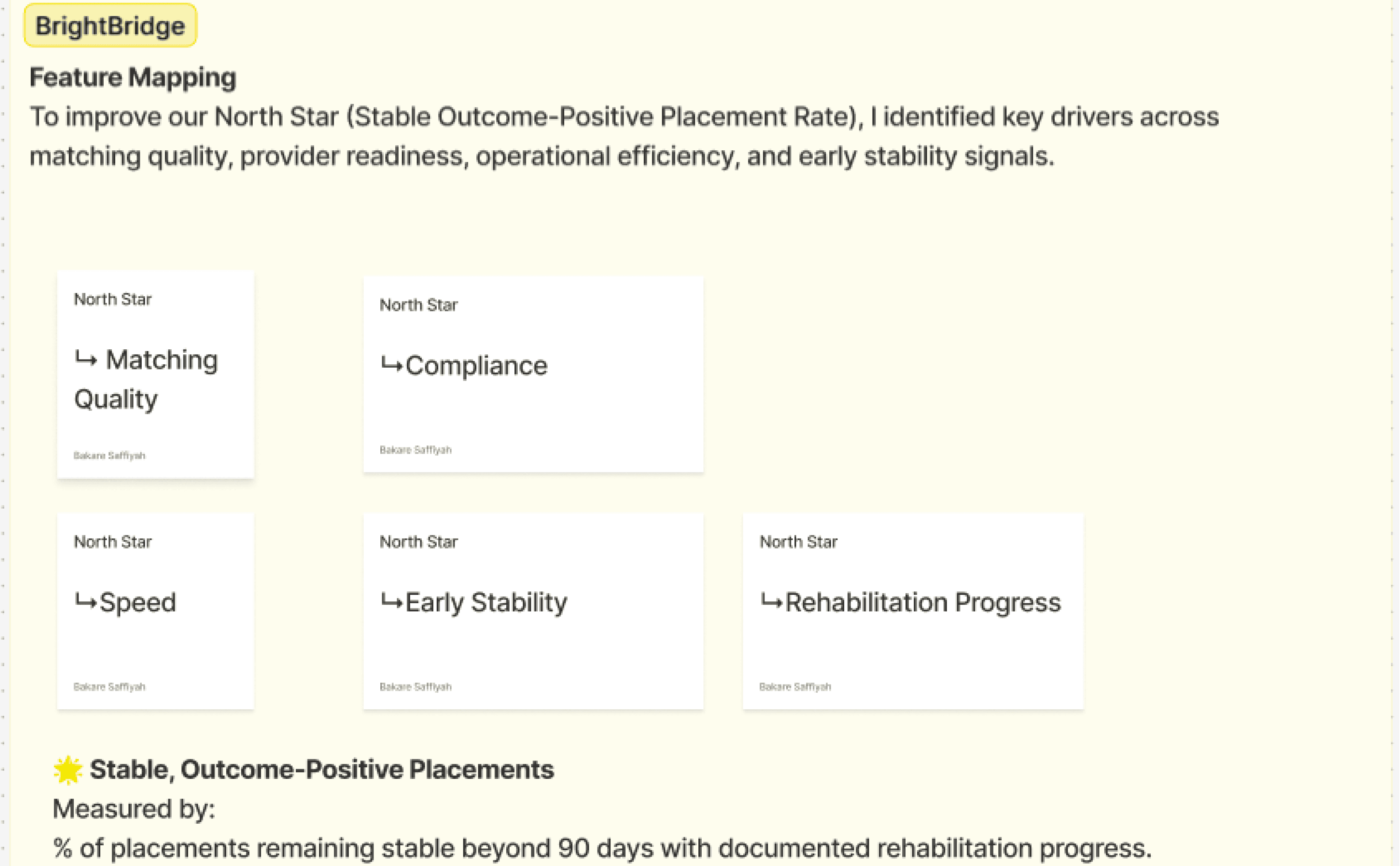
Before designing solutions, we defined our one major North Star: Stable Outcome-Positive Placement Rate. Every feature and supporting metric was mapped to this outcome. Features include:
6- step structured handover flow
Developmental goal and progress tracking
Goal alignment
CONSTRAINTS
Clarifying constraints early
Knowing our constraints early helped us design something realistic and shippable, not just conceptually strong. We aligned on:
Technical feasibility
Regulatory & compliance boundaries
Time and scope limits
DESIGN SOLUTION
Feature 1 - 6-Step Structured Handover flow
Problem it solves: Fragmented, unclear handover process of a child from LA to an SLP.
Why this feature matters:
This structured flow is introduced to stabilize the completion rate and process of handing over a child by local authority, to a supported living provider.
DESIGN SOLUTION
Feature 2 -Developmental Goals & Progress Tracking
Problem it solves: This feature shifts the platform from: "We placed the child successfully” to “The child is improving measurably.”
Why this feature matters:
It ensures structured care planning actually happens.
Feature 3 - Goal Alignment
Problem it solves: Developmental goals are linked directly to identified needs in the child’s record.
Why this feature matters:
This prevents random or generic goals.
It ensures care is needs-led, not template-led.
BI-WEEKLY VALIDATION
Moderated usability session
I currently do not have a visual reference from our usability sessions, however, it is notable to say, In our validation session, I challenged the initial framing. Which is “Rather than optimizing for efficiency alone, I repositioned the product around measurable child outcomes”. This elevated it from a workflow tool to an outcome-driven platform, a space competitors weren’t owning.